
Summary: Directive 2000/14/EC regulates the noise emitted into the environment by equipment for use outdoors. Below are the 10 mistakes manufacturers and importers make most often in noise conformity assessment, and how to avoid them.
Directive 2000/14/EC on noise emission in the environment by equipment for use outdoors looks narrower than machinery safety legislation, yet in practice it is one of the areas where nonconformities are found most often. The list below is drawn from conformity assessments and market surveillance findings.
1. Not Realising the Equipment Is in Scope
Manufacturers often complete the machinery safety requirements but overlook that the product also falls under the outdoor noise directive. The Directive covers 57 types of equipment, including generators, compressors, lawnmowers, forklift trucks, concrete breakers and high-pressure water jet machines. For equipment in scope, machinery safety compliance alone is not enough to affix the CE marking.
2. Confusing Article 12 and Article 13
Article 12 equipment is subject to permissible sound power limits and requires the involvement of a notified body; Article 13 equipment is subject to noise marking only. Misreading the power or capacity thresholds and placing Article 12 equipment on the market on the basis of a manufacturer’s declaration alone is one of the most serious mistakes. See our article on Article 12 vs Article 13.
3. Putting the Measured Value on the Label
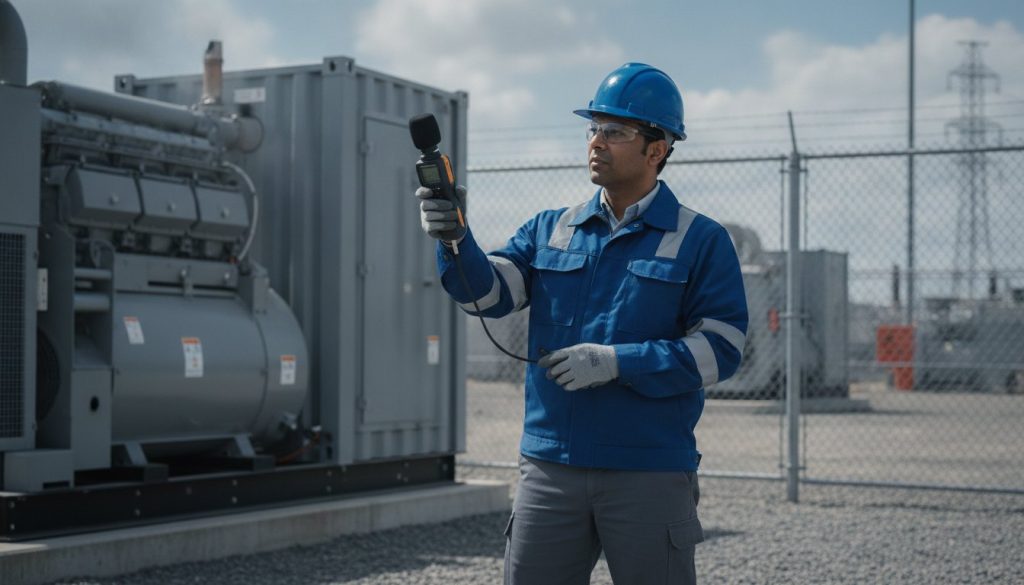
The label shows the guaranteed sound power level, which takes account of measurement uncertainty and production variation. Printing the measured value directly on the label leads to an incorrect declaration and creates a real risk that the value will be exceeded when market surveillance authorities measure the product.
4. Wrong Measurement Method or Operating Conditions
Annex III of the Directive defines, for each type of equipment, the basic noise emission standard, the operating conditions (loaded, unloaded, specified speed) and the measurement duration. A general noise survey, or the sound pressure level at the operator’s ear, cannot replace the sound power level required by 2000/14/EC.
5. Confusing Operator Noise with Environmental Noise
Machinery safety legislation requires the instruction manual to declare the emission sound pressure level at the operator’s position. Directive 2000/14/EC regulates the sound power level emitted into the environment. The two values are different, are determined by different methods, and both must be declared.
6. Missing or Incorrect Marking
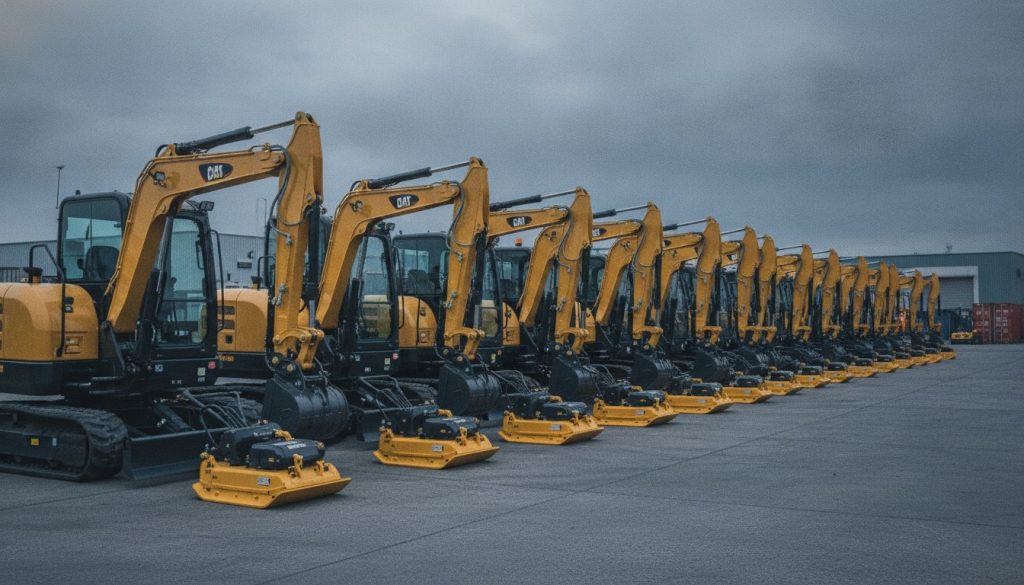
- CE marking is present, but the guaranteed sound power level (LWA) label is missing.
- The label does not follow the model in Annex IV, or the value is not given as a whole number.
- The label is not indelible, is illegible, or is placed where it cannot be seen.
Our noise marking guide explains the label format and dimensions.
7. Incomplete Declaration of Conformity
For 2000/14/EC, the EC declaration of conformity must state the conformity assessment procedure followed, the name and address of the notified body where one is involved, the measured sound power level of a representative sample, the guaranteed sound power level, and the details of the person keeping the technical documentation. Adding only the directive number to the machinery declaration is not sufficient.
8. Not Updating the Assessment After a Design Change
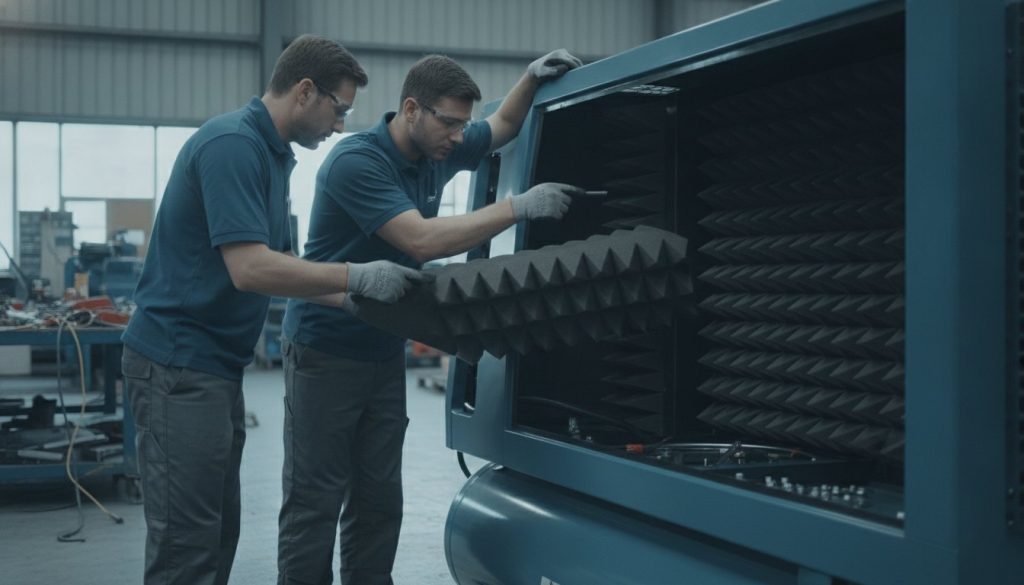
Changes to the engine, exhaust silencer, fan, cab or bodywork can change the sound power level. After such a change, the measurement, the guaranteed value and the technical documentation must be updated, and under procedures involving a notified body, the notified body must be informed.
9. Covering a Whole Product Family with One Measurement
In product families where the same frame is offered with different engines or power ratings, all variants are often declared on the basis of a single model’s measurement. It must be technically justified that each variant is represented, and separate measurements must be made where necessary.
10. Not Maintaining Production Control
Conformity does not end with the first measurement. The manufacturer must take measures to ensure that every unit produced does not exceed the guaranteed value, and must keep the technical documentation for 10 years after the last unit is manufactured.
TESTPLUS carries out conformity assessment as a notified body (NB 2908) under Directive 2000/14/EC. For scope and applications, see our Noise Emission (2000/14/EC) page.
Directive 2000/14/EC: Frequently Asked Questions
Does noise marking replace the CE marking?
No. The LWA marking showing the guaranteed sound power level appears on the equipment in addition to the CE marking. The equipment may also be subject to other legislation such as machinery safety and EMC, and the requirements of each must be met separately.
Who receives a copy of the declaration of conformity?
Under Article 16 of 2000/14/EC, the manufacturer or its authorised representative sends a copy of the EC declaration of conformity for each type of equipment to the competent authority of the Member State concerned and to the European Commission. The data is used to monitor noise emissions.
Does the same apply in Great Britain?
In Great Britain, the equivalent rules are set out in the Noise Emission in the Environment by Equipment for use Outdoors Regulations 2001, with UKCA marking. CE marking continues to be accepted in Great Britain for most products, and Northern Ireland continues to apply the EU rules.
Official Sources
Related Noise Certification Guides
This guide is part of the Outdoor Noise Directive 2000/14/EC certification resources of TESTPLUS, Notified Body NB 2908 (see our NANDO listing).
- Noise certification process step by step (2000/14/EC)
- Noise testing: sound power level (LWA) measurement
- Noise marking and the guaranteed sound power level label
- Article 12 vs Article 13: noise limits or marking only?
- Generator noise level regulations and compliance
- Compressor noise compliance under 2000/14/EC
- Construction equipment noise measurement
- Lift trucks under the Outdoor Noise Directive
